

Thinking about investing in Hoppers Crossing’s property market? This suburb in Melbourne’s west is growing fast. It’s a great spot for both homebuyers and investors. But what are the latest trends in this lively real estate scene? Let’s explore the insights to help you make smart choices.
Key Takeaways
- Hoppers Crossing’s median house price is $619,000 with 1.48% annual capital growth.
- The suburb has a diverse range of property types, including 615 houses and 70 units available for sale.
- Population growth in Hoppers Crossing has been steady at 2.9% from 2011 to 2016, attracting young families and first-home buyers.
- Rental yields for houses and units are currently at 4.06% and 4.86% respectively, offering attractive investment opportunities.
- Proximity to amenities, transport, and employment hubs make Hoppers Crossing a desirable location for homebuyers and investors alike.
Overview of the Hoppers Crossing Property Market
The Hoppers Crossing property market has seen a lot of action lately. It shows steady Suburb Growth and Development and strong Local Property Value Trends. This suburb in Melbourne’s west is attracting many homebuyers, investors, and real estate fans.
Current Market Conditions
Houses in Hoppers Crossing sell in about 34 days, while units take 36 days. The median house price is $619,000, with a 1.48% annual growth. Units cost $450,000 on average, with a 2.27% annual growth.
Key Economic Drivers
The suburb’s location, infrastructure, and economy are key to its market. The Hoppers Crossing Railway Station and Pacific Werribee shopping complex are major factors. The median household income has grown from $1,306 to $1,408 per week, a 7.81% increase in five years.
Historical Price Trends
Hoppers Crossing has seen steady property value growth. House prices have risen by 3.08% annually, and unit prices by 3.44%. This makes it a great place for investment, appealing to both owners and investors.
“Hoppers Crossing’s strategic location, well-developed infrastructure, and thriving local economy have been instrumental in driving its property market.”
Factors Influencing Property Prices
Investing in Hoppers Crossing requires knowing what affects property prices. The local market is influenced by supply and demand, jobs, and new infrastructure. These factors all play a part in how much homes are worth.
Supply and Demand Dynamics
In the last year, Hoppers Crossing had 525 house sales and 63 unit sales. This shows a strong demand for different types of properties. The balance between what’s available and what buyers want affects prices, with popular homes often costing more.
Local Employment Opportunities
The job market in Hoppers Crossing mainly offers clerical jobs. This stable economy helps the community. Jobs nearby can also affect housing demand and what buyers can afford.
Infrastructure Developments
The area has improved a lot, with new places like AquaPulse and Heathdale Wetlands. These spots offer fun for locals. The Hoppers Crossing Railway Station also makes getting around easier, making the area more appealing.
| Metric | Value |
|---|---|
| Real Estate Agents in Hoppers Crossing | 112 |
| Average Real Estate Agent Commission Rate | 1.95% |
| Properties Sold in Past 12 Months | 554 |
| Average Sale Price | $607,737 |
| Average Days on Market | 46.48 days |
Knowing these key factors influencing property prices in Hoppers Crossing helps investors. They can find lucrative Investment Opportunities Hoppers Crossing that fit their goals and risk level.
Demographics and Their Impact on Housing
The Hoppers Crossing housing market is shaped by the area’s changing demographics. The latest Wyndham Property Insights show the population grew by 2.9% from 2011 to 2016. It now stands at 38,698 residents.
Population Growth in Hoppers Crossing
This growth has boosted the Hoppers Crossing Housing Market Analysis. It has led to more demand for homes. The main age group, 20-29 years, is looking for their first or second homes.
Age Distribution Trends
- The median age rose from 35 in 2011 to 36 in 2016. This shows the population is getting older.
- Couples with kids are the main household type. They pay $1400 – $1799 a month on mortgages.
Buying Preferences by Demographic
The Wyndham Property Insights show a change in what people want to buy. In 2011, 77% of homes were owned. But by 2016, this dropped to 73.4%, showing more rentals.
“The changing demographics in Hoppers Crossing, with a growing younger population and a shift towards more rental properties, have had a significant impact on the local housing market.”
These trends show the importance of understanding the Hoppers Crossing population. Developers and investors need to keep up with these changes for new projects or investments.
Types of Properties in Hoppers Crossing
Hoppers Crossing is in the Melbourne Western Suburbs. It has a wide range of properties for sale. Houses are the most common, with 615 available, compared to 70 units.
Houses vs. Apartments
The median house price is $619,000, while units cost $450,000 on average. This shows houses are more sought after and valuable. Yet, units offer good investment chances, with rental yields at 4.86% compared to houses at 4.06%.
New Developments vs. Established Homes
Hoppers Crossing has both new and old homes. New properties are pricier but come with modern features. Both new and old homes have their appeal for buyers and investors.
Investment Properties
Hoppers Crossing is great for building a property portfolio. It offers rental yields of 4.06% for houses and 4.86% for units. The suburb’s growth and new infrastructure make it a top choice for investors in Melbourne’s Western Suburbs.
| Property Type | Median Price | Annual Capital Growth | Rental Yield |
|---|---|---|---|
| Houses | $619,000 | 1.48% | 4.06% |
| Apartments/Units | $450,000 | 2.27% | 4.86% |
“Hoppers Crossing offers a diverse range of property options, catering to both homebuyers and savvy investors seeking attractive returns.”
Analyzing Property Sales Data
Understanding the local property market in Hoppers Crossing is key. Recent trends show a lively housing scene. This gives valuable insights for buyers and sellers.
Recent Sales Trends
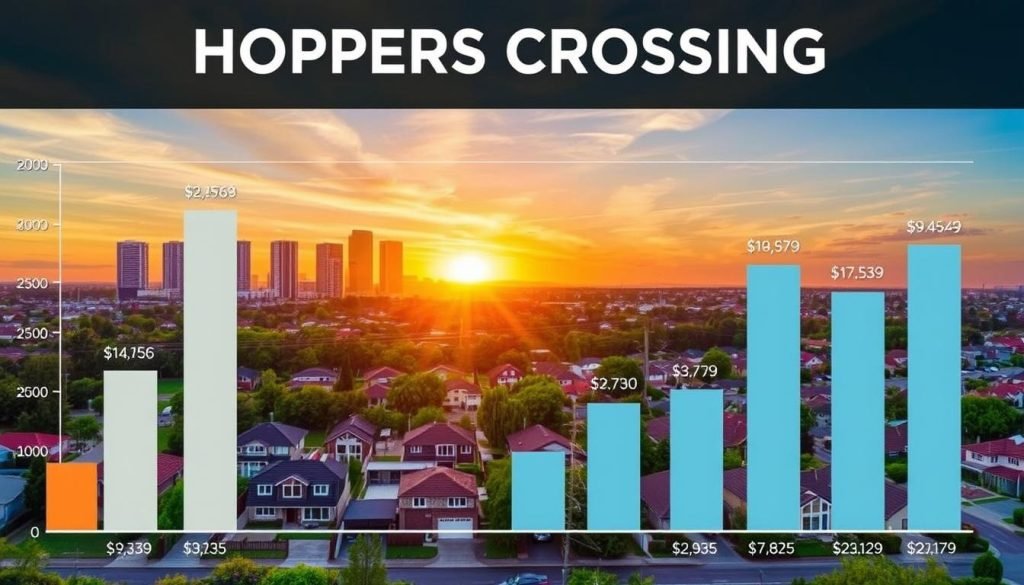
In the last 12 months, Hoppers Crossing saw 525 house sales and 63 unit sales. This shows the area’s ongoing appeal to homebuyers and investors.
Median House Prices
The median house price in Hoppers Crossing is $619,000. The median unit price is $450,000. These prices highlight the variety of homes available, fitting different budgets and tastes.
Time on Market Insights
Knowing how long properties stay on the market is important. Houses in Hoppers Crossing average 34 days to sell. Units take about 36 days. This helps sellers plan their listing strategies.
| Property Type | Median Price | Time on Market (Days) | Quarterly Growth |
|---|---|---|---|
| Houses | $619,000 | 34 | -0.16% |
| Units | $450,000 | 36 | 0% |
The Local Property Value Trends and Hoppers Crossing Housing Market Analysis show a market with small changes. Houses have seen a -0.16% quarterly drop. Units have kept a steady 0% growth.
“The Hoppers Crossing housing market has shown strength, with a mix of house and unit sales. As the area grows, these insights will be crucial for buyers, sellers, and investors.”
The Role of Real Estate Agents
In Hoppers Crossing, you can count on real estate agents to guide you through the property market. Companies like Ray White Werribee, Reliance Real Estate, and @realty offer insights and advice. They help you make smart choices.
Choosing the Right Agent
When picking a real estate agent in Hoppers Crossing, look at their success, local knowledge, and how they communicate. Choose agents with a strong track record and deep understanding of the Wyndham property market. Their ability to listen and tailor their service to you is crucial.
Benefits of Local Expertise
Agents familiar with Hoppers Crossing offer deep insights into the local market. They know the area well, including recent sales and upcoming changes. This knowledge helps you make better decisions and feel more confident in your property search.
Current Agent Strategies
Hoppers Crossing agents use various strategies to help their clients. They might use auctions or private sales, and create marketing plans based on local trends. Knowing these strategies can help you achieve your property goals.
Working with a local agent in Hoppers Crossing can greatly benefit you. Their expertise and personalized service can guide you through the Wyndham property market. They help you make choices that meet your needs and goals.
Understanding Rental Market Trends
The Hoppers Crossing rental market is strong, with steady demand and prices. Houses have a median weekly rent of $460, offering a 4.0% annual return. Units, with a median weekly rent of $420, provide a 5.0% return.
Rental Demand and Vacancy Rates
More homes in Hoppers Crossing are now rented out. This change is due to the area’s Investment Opportunities Hoppers Crossing and stable Local Property Value Trends. Vacancy rates are low, showing a healthy market with steady demand.
Average Rental Prices
The median price for a 2-bedroom home is $530,500, with a weekly rent of $415. For 3-bedroom homes, the median price is $598,000, renting for $450 per week. Larger 4-bedroom homes have a median price of $686,000 and a weekly rent of $500.
In the unit market, 2-bedroom units have a median price of $422,000 and rent for $387 per week. 3-bedroom units have a median price of $460,000 and rent for $450 per week.
Long-term vs. Short-term Rentals
Hoppers Crossing is known for its long-term rentals. Short-term rental options are less common, as it attracts families and long-term residents. This stability makes it a reliable choice for investors.
“The Hoppers Crossing rental market has remained resilient, with steady demand and attractive yields for investors. As the area continues to attract new residents, the long-term rental outlook remains positive.”
Impact of Economic Policies
The property market in Hoppers Crossing, Wyndham, is shaped by many economic policies. Interest rates, government incentives, and housing supply policies are key. They all play a big role in the local real estate scene.
Interest Rate Trends
Interest rates are crucial for homebuyers in Hoppers Crossing. The average monthly mortgage payment is between $1,400 and $1,799. This amount can change with interest rates.
The Reserve Bank of Australia adjusts the official cash rate to control inflation. This affects how affordable mortgages are for buyers and investors.
Government Incentives for Buyers
The Australian government has schemes to help homebuyers. The First Home Buyer Assistance Scheme and the First Home Super Saver Scheme are examples. These programs offer financial help and tax benefits, making buying a home in Hoppers Crossing easier for first-time buyers.
Housing Supply Policies
Government policies and regulations affect housing availability in Hoppers Crossing. These include land use, zoning, and development rules. Policies to increase housing supply can make the market more affordable and offer more choices for buyers and investors in Wyndham.
It’s important to understand how economic policies impact the Hoppers Crossing property market. This knowledge helps buyers and investors make better decisions. It also helps them take advantage of the opportunities in this dynamic market.
| Suburb | Rental Yield | House Price Growth |
|---|---|---|
| Hawthorn East | 3.3% | – |
| Frankston South | 2.4% | 15.7% |
| Bentleigh | 3.3% | – |
| Coburg | 3.6% | – |
| Brighton East | – | 11.5% |
“The completion of the rail crossing removal around Hoppers Crossing has eased congestion, and the West Gate Tunnel project is expected to further alleviate peak hour traffic congestion on the West Gate Bridge.”
Future Predictions for Hoppers Crossing
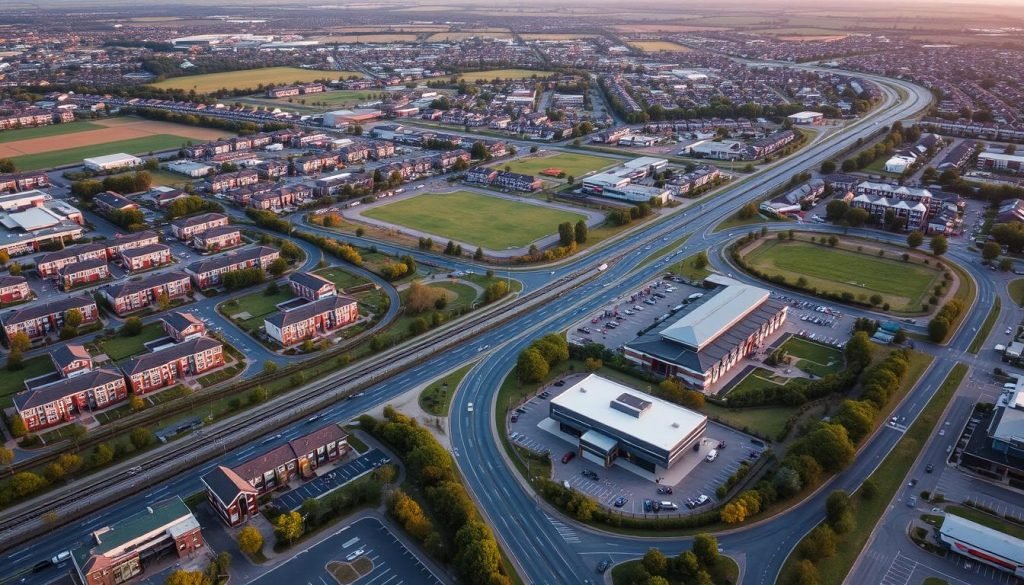
The future of Hoppers Crossing in Victoria is looking bright. The area is seeing steady suburb growth and development. This means the real estate market is set to grow, offering investment opportunities.
Hoppers Crossing’s location, diverse population, and strong community spirit attract many. This makes it a great place for both homebuyers and investors.
Projected Growth Areas
Hoppers Crossing is set to grow in several key areas. New homes are being built to meet the growing demand. The area’s infrastructure, like better transport and local amenities, will also improve.
Market Sentiment Analysis
The real estate market in Hoppers Crossing is expected to keep its steady demand. Its close distance to Melbourne CBD and local amenities make it appealing. Families and young professionals are drawn to it.
Experts predict steady capital growth and strong rental yields. This makes Hoppers Crossing a great choice for investment opportunities Hoppers Crossing.
Potential Risks and Opportunities
While Hoppers Crossing’s future is bright, there are risks like market changes. But the opportunities are big. The suburb’s capital growth and strong rental yields attract investors.
Investors looking to benefit from suburb growth and development will find Hoppers Crossing appealing.
“The Hoppers Crossing real estate market has experienced steady growth over the years, and the future outlook remains positive. With the right strategy and market insight, investors can unlock the full potential of this thriving suburb.”
Tips for Investors in Hoppers Crossing
Investors in Hoppers Crossing need to do their homework. It’s important to know the local laws and property management rules. Building a diverse property portfolio here can be very profitable, thanks to good rental returns and growth.
Researching the Market
Investors should study the Hoppers Crossing property market well. Look at demographic trends, new infrastructure, and market performance. This knowledge helps find the best investment matches for your goals and risk level.
Understanding Legalities and Regulations
Get to know the legal and regulatory landscape in Hoppers Crossing. This includes zoning laws, building codes, and property management rules. Talking to local experts like real estate agents and lawyers is a good idea. It helps make sure your investments follow the rules and avoid risks.
Building a Property Portfolio
Spread your investments across different types of properties in Hoppers Crossing. This means having both houses and units to meet the area’s needs. Keep an eye on growth and new projects to find the best places for your money. Plan for the long term to grow your portfolio and increase your earnings.
FAQ
What is the current state of the Hoppers Crossing property market?
What are the key economic drivers of the Hoppers Crossing property market?
What are the historical price trends in Hoppers Crossing?
What are the supply and demand dynamics in the Hoppers Crossing property market?
How has the demographic profile of Hoppers Crossing influenced the housing market?
What types of properties are available in Hoppers Crossing?
What are the recent sales trends in Hoppers Crossing?
What role do real estate agents play in the Hoppers Crossing property market?
What are the rental market trends in Hoppers Crossing?
How do economic policies impact the Hoppers Crossing property market?
FAQ
What is the current state of the Hoppers Crossing property market?
Hoppers Crossing is 24 km west of Melbourne CBD. It has 615 houses and 70 units for sale. The median house price is 9,000, and units are 0,000.
The suburb’s houses have grown by 1.48% annually, and units by 2.27%. This shows steady growth in property values.
What are the key economic drivers of the Hoppers Crossing property market?
The Hoppers Crossing market is driven by local infrastructure. This includes the Hoppers Crossing Railway Station and Pacific Werribee shopping complex. The suburb has 38,698 residents, growing by 2.9% from 2011 to 2016.
What are the historical price trends in Hoppers Crossing?
Houses in Hoppers Crossing have seen an average annual growth of 3.08%. Units have grown by 3.44%. The median household income has risen by 7.81% over five years.
What are the supply and demand dynamics in the Hoppers Crossing property market?
In the last 12 months, 525 houses and 63 units were sold. The suburb offers a mix of new and established homes. Local jobs are mainly in clerical roles.
How has the demographic profile of Hoppers Crossing influenced the housing market?
The suburb’s population grew by 2.9% from 2011 to 2016. The 20-29 age group is the largest. The median age increased from 35 to 36.
There’s been a slight drop in owner-occupied homes, showing more rental properties. This shift affects the housing market.
What types of properties are available in Hoppers Crossing?
Houses dominate the market with 615 for sale, compared to 70 units. The suburb offers a variety of homes. Investment properties show strong rental yields.
What are the recent sales trends in Hoppers Crossing?
In the last 12 months, 525 houses and 63 units were sold. The median house price is 9,000, and units are 0,000. Houses take 34 days to sell, units 36.
Quarterly growth for houses is -0.16%, and units show 0% growth. This shows a stable market.
What role do real estate agents play in the Hoppers Crossing property market?
Real estate agents like Ray White Werribee and Reliance Real Estate are key players. They offer local insights and market trends. They use various sales methods to meet buyer and seller needs.
What are the rental market trends in Hoppers Crossing?
Rental demand is strong, with average weekly rents of 0 for houses and 0 for units. The gross rental yields are 4.06% for houses and 4.86% for units. More rental properties have been added, with long-term rentals common.
How do economic policies impact the Hoppers Crossing property market?
Economic policies greatly affect the market. Interest rates influence mortgage repayments, which range from
FAQ
What is the current state of the Hoppers Crossing property market?
Hoppers Crossing is 24 km west of Melbourne CBD. It has 615 houses and 70 units for sale. The median house price is $619,000, and units are $450,000.
The suburb’s houses have grown by 1.48% annually, and units by 2.27%. This shows steady growth in property values.
What are the key economic drivers of the Hoppers Crossing property market?
The Hoppers Crossing market is driven by local infrastructure. This includes the Hoppers Crossing Railway Station and Pacific Werribee shopping complex. The suburb has 38,698 residents, growing by 2.9% from 2011 to 2016.
What are the historical price trends in Hoppers Crossing?
Houses in Hoppers Crossing have seen an average annual growth of 3.08%. Units have grown by 3.44%. The median household income has risen by 7.81% over five years.
What are the supply and demand dynamics in the Hoppers Crossing property market?
In the last 12 months, 525 houses and 63 units were sold. The suburb offers a mix of new and established homes. Local jobs are mainly in clerical roles.
How has the demographic profile of Hoppers Crossing influenced the housing market?
The suburb’s population grew by 2.9% from 2011 to 2016. The 20-29 age group is the largest. The median age increased from 35 to 36.
There’s been a slight drop in owner-occupied homes, showing more rental properties. This shift affects the housing market.
What types of properties are available in Hoppers Crossing?
Houses dominate the market with 615 for sale, compared to 70 units. The suburb offers a variety of homes. Investment properties show strong rental yields.
What are the recent sales trends in Hoppers Crossing?
In the last 12 months, 525 houses and 63 units were sold. The median house price is $619,000, and units are $450,000. Houses take 34 days to sell, units 36.
Quarterly growth for houses is -0.16%, and units show 0% growth. This shows a stable market.
What role do real estate agents play in the Hoppers Crossing property market?
Real estate agents like Ray White Werribee and Reliance Real Estate are key players. They offer local insights and market trends. They use various sales methods to meet buyer and seller needs.
What are the rental market trends in Hoppers Crossing?
Rental demand is strong, with average weekly rents of $470 for houses and $420 for units. The gross rental yields are 4.06% for houses and 4.86% for units. More rental properties have been added, with long-term rentals common.
How do economic policies impact the Hoppers Crossing property market?
Economic policies greatly affect the market. Interest rates influence mortgage repayments, which range from $1,400 to $1,799 monthly. Government incentives and housing supply policies shape the market and affordability.
What are the future predictions for the Hoppers Crossing property market?
The future looks positive for Hoppers Crossing. Growth is expected in new developments and infrastructure. Demand is expected to continue, driven by proximity to Melbourne CBD and local amenities.
While there are risks, the suburb’s consistent growth and strong rental yields offer opportunities.
What should investors consider when investing in the Hoppers Crossing property market?
Investors should conduct thorough market research. Understanding local laws and regulations is crucial. The suburb’s strong rental yields and growth make it attractive for building a portfolio.
Consider the mix of houses and units, demographic trends, and infrastructure developments.
,400 to
FAQ
What is the current state of the Hoppers Crossing property market?
Hoppers Crossing is 24 km west of Melbourne CBD. It has 615 houses and 70 units for sale. The median house price is $619,000, and units are $450,000.
The suburb’s houses have grown by 1.48% annually, and units by 2.27%. This shows steady growth in property values.
What are the key economic drivers of the Hoppers Crossing property market?
The Hoppers Crossing market is driven by local infrastructure. This includes the Hoppers Crossing Railway Station and Pacific Werribee shopping complex. The suburb has 38,698 residents, growing by 2.9% from 2011 to 2016.
What are the historical price trends in Hoppers Crossing?
Houses in Hoppers Crossing have seen an average annual growth of 3.08%. Units have grown by 3.44%. The median household income has risen by 7.81% over five years.
What are the supply and demand dynamics in the Hoppers Crossing property market?
In the last 12 months, 525 houses and 63 units were sold. The suburb offers a mix of new and established homes. Local jobs are mainly in clerical roles.
How has the demographic profile of Hoppers Crossing influenced the housing market?
The suburb’s population grew by 2.9% from 2011 to 2016. The 20-29 age group is the largest. The median age increased from 35 to 36.
There’s been a slight drop in owner-occupied homes, showing more rental properties. This shift affects the housing market.
What types of properties are available in Hoppers Crossing?
Houses dominate the market with 615 for sale, compared to 70 units. The suburb offers a variety of homes. Investment properties show strong rental yields.
What are the recent sales trends in Hoppers Crossing?
In the last 12 months, 525 houses and 63 units were sold. The median house price is $619,000, and units are $450,000. Houses take 34 days to sell, units 36.
Quarterly growth for houses is -0.16%, and units show 0% growth. This shows a stable market.
What role do real estate agents play in the Hoppers Crossing property market?
Real estate agents like Ray White Werribee and Reliance Real Estate are key players. They offer local insights and market trends. They use various sales methods to meet buyer and seller needs.
What are the rental market trends in Hoppers Crossing?
Rental demand is strong, with average weekly rents of $470 for houses and $420 for units. The gross rental yields are 4.06% for houses and 4.86% for units. More rental properties have been added, with long-term rentals common.
How do economic policies impact the Hoppers Crossing property market?
Economic policies greatly affect the market. Interest rates influence mortgage repayments, which range from $1,400 to $1,799 monthly. Government incentives and housing supply policies shape the market and affordability.
What are the future predictions for the Hoppers Crossing property market?
The future looks positive for Hoppers Crossing. Growth is expected in new developments and infrastructure. Demand is expected to continue, driven by proximity to Melbourne CBD and local amenities.
While there are risks, the suburb’s consistent growth and strong rental yields offer opportunities.
What should investors consider when investing in the Hoppers Crossing property market?
Investors should conduct thorough market research. Understanding local laws and regulations is crucial. The suburb’s strong rental yields and growth make it attractive for building a portfolio.
Consider the mix of houses and units, demographic trends, and infrastructure developments.
,799 monthly. Government incentives and housing supply policies shape the market and affordability.
What are the future predictions for the Hoppers Crossing property market?
The future looks positive for Hoppers Crossing. Growth is expected in new developments and infrastructure. Demand is expected to continue, driven by proximity to Melbourne CBD and local amenities.
While there are risks, the suburb’s consistent growth and strong rental yields offer opportunities.
What should investors consider when investing in the Hoppers Crossing property market?
Investors should conduct thorough market research. Understanding local laws and regulations is crucial. The suburb’s strong rental yields and growth make it attractive for building a portfolio.
Consider the mix of houses and units, demographic trends, and infrastructure developments.
FAQ
What is the current state of the Hoppers Crossing property market?
Hoppers Crossing is 24 km west of Melbourne CBD. It has 615 houses and 70 units for sale. The median house price is 9,000, and units are 0,000.
The suburb’s houses have grown by 1.48% annually, and units by 2.27%. This shows steady growth in property values.
What are the key economic drivers of the Hoppers Crossing property market?
The Hoppers Crossing market is driven by local infrastructure. This includes the Hoppers Crossing Railway Station and Pacific Werribee shopping complex. The suburb has 38,698 residents, growing by 2.9% from 2011 to 2016.
What are the historical price trends in Hoppers Crossing?
Houses in Hoppers Crossing have seen an average annual growth of 3.08%. Units have grown by 3.44%. The median household income has risen by 7.81% over five years.
What are the supply and demand dynamics in the Hoppers Crossing property market?
In the last 12 months, 525 houses and 63 units were sold. The suburb offers a mix of new and established homes. Local jobs are mainly in clerical roles.
How has the demographic profile of Hoppers Crossing influenced the housing market?
The suburb’s population grew by 2.9% from 2011 to 2016. The 20-29 age group is the largest. The median age increased from 35 to 36.
There’s been a slight drop in owner-occupied homes, showing more rental properties. This shift affects the housing market.
What types of properties are available in Hoppers Crossing?
Houses dominate the market with 615 for sale, compared to 70 units. The suburb offers a variety of homes. Investment properties show strong rental yields.
What are the recent sales trends in Hoppers Crossing?
In the last 12 months, 525 houses and 63 units were sold. The median house price is 9,000, and units are 0,000. Houses take 34 days to sell, units 36.
Quarterly growth for houses is -0.16%, and units show 0% growth. This shows a stable market.
What role do real estate agents play in the Hoppers Crossing property market?
Real estate agents like Ray White Werribee and Reliance Real Estate are key players. They offer local insights and market trends. They use various sales methods to meet buyer and seller needs.
What are the rental market trends in Hoppers Crossing?
Rental demand is strong, with average weekly rents of 0 for houses and 0 for units. The gross rental yields are 4.06% for houses and 4.86% for units. More rental properties have been added, with long-term rentals common.
How do economic policies impact the Hoppers Crossing property market?
Economic policies greatly affect the market. Interest rates influence mortgage repayments, which range from
FAQ
What is the current state of the Hoppers Crossing property market?
Hoppers Crossing is 24 km west of Melbourne CBD. It has 615 houses and 70 units for sale. The median house price is $619,000, and units are $450,000.
The suburb’s houses have grown by 1.48% annually, and units by 2.27%. This shows steady growth in property values.
What are the key economic drivers of the Hoppers Crossing property market?
The Hoppers Crossing market is driven by local infrastructure. This includes the Hoppers Crossing Railway Station and Pacific Werribee shopping complex. The suburb has 38,698 residents, growing by 2.9% from 2011 to 2016.
What are the historical price trends in Hoppers Crossing?
Houses in Hoppers Crossing have seen an average annual growth of 3.08%. Units have grown by 3.44%. The median household income has risen by 7.81% over five years.
What are the supply and demand dynamics in the Hoppers Crossing property market?
In the last 12 months, 525 houses and 63 units were sold. The suburb offers a mix of new and established homes. Local jobs are mainly in clerical roles.
How has the demographic profile of Hoppers Crossing influenced the housing market?
The suburb’s population grew by 2.9% from 2011 to 2016. The 20-29 age group is the largest. The median age increased from 35 to 36.
There’s been a slight drop in owner-occupied homes, showing more rental properties. This shift affects the housing market.
What types of properties are available in Hoppers Crossing?
Houses dominate the market with 615 for sale, compared to 70 units. The suburb offers a variety of homes. Investment properties show strong rental yields.
What are the recent sales trends in Hoppers Crossing?
In the last 12 months, 525 houses and 63 units were sold. The median house price is $619,000, and units are $450,000. Houses take 34 days to sell, units 36.
Quarterly growth for houses is -0.16%, and units show 0% growth. This shows a stable market.
What role do real estate agents play in the Hoppers Crossing property market?
Real estate agents like Ray White Werribee and Reliance Real Estate are key players. They offer local insights and market trends. They use various sales methods to meet buyer and seller needs.
What are the rental market trends in Hoppers Crossing?
Rental demand is strong, with average weekly rents of $470 for houses and $420 for units. The gross rental yields are 4.06% for houses and 4.86% for units. More rental properties have been added, with long-term rentals common.
How do economic policies impact the Hoppers Crossing property market?
Economic policies greatly affect the market. Interest rates influence mortgage repayments, which range from $1,400 to $1,799 monthly. Government incentives and housing supply policies shape the market and affordability.
What are the future predictions for the Hoppers Crossing property market?
The future looks positive for Hoppers Crossing. Growth is expected in new developments and infrastructure. Demand is expected to continue, driven by proximity to Melbourne CBD and local amenities.
While there are risks, the suburb’s consistent growth and strong rental yields offer opportunities.
What should investors consider when investing in the Hoppers Crossing property market?
Investors should conduct thorough market research. Understanding local laws and regulations is crucial. The suburb’s strong rental yields and growth make it attractive for building a portfolio.
Consider the mix of houses and units, demographic trends, and infrastructure developments.
,400 to
FAQ
What is the current state of the Hoppers Crossing property market?
Hoppers Crossing is 24 km west of Melbourne CBD. It has 615 houses and 70 units for sale. The median house price is $619,000, and units are $450,000.
The suburb’s houses have grown by 1.48% annually, and units by 2.27%. This shows steady growth in property values.
What are the key economic drivers of the Hoppers Crossing property market?
The Hoppers Crossing market is driven by local infrastructure. This includes the Hoppers Crossing Railway Station and Pacific Werribee shopping complex. The suburb has 38,698 residents, growing by 2.9% from 2011 to 2016.
What are the historical price trends in Hoppers Crossing?
Houses in Hoppers Crossing have seen an average annual growth of 3.08%. Units have grown by 3.44%. The median household income has risen by 7.81% over five years.
What are the supply and demand dynamics in the Hoppers Crossing property market?
In the last 12 months, 525 houses and 63 units were sold. The suburb offers a mix of new and established homes. Local jobs are mainly in clerical roles.
How has the demographic profile of Hoppers Crossing influenced the housing market?
The suburb’s population grew by 2.9% from 2011 to 2016. The 20-29 age group is the largest. The median age increased from 35 to 36.
There’s been a slight drop in owner-occupied homes, showing more rental properties. This shift affects the housing market.
What types of properties are available in Hoppers Crossing?
Houses dominate the market with 615 for sale, compared to 70 units. The suburb offers a variety of homes. Investment properties show strong rental yields.
What are the recent sales trends in Hoppers Crossing?
In the last 12 months, 525 houses and 63 units were sold. The median house price is $619,000, and units are $450,000. Houses take 34 days to sell, units 36.
Quarterly growth for houses is -0.16%, and units show 0% growth. This shows a stable market.
What role do real estate agents play in the Hoppers Crossing property market?
Real estate agents like Ray White Werribee and Reliance Real Estate are key players. They offer local insights and market trends. They use various sales methods to meet buyer and seller needs.
What are the rental market trends in Hoppers Crossing?
Rental demand is strong, with average weekly rents of $470 for houses and $420 for units. The gross rental yields are 4.06% for houses and 4.86% for units. More rental properties have been added, with long-term rentals common.
How do economic policies impact the Hoppers Crossing property market?
Economic policies greatly affect the market. Interest rates influence mortgage repayments, which range from $1,400 to $1,799 monthly. Government incentives and housing supply policies shape the market and affordability.
What are the future predictions for the Hoppers Crossing property market?
The future looks positive for Hoppers Crossing. Growth is expected in new developments and infrastructure. Demand is expected to continue, driven by proximity to Melbourne CBD and local amenities.
While there are risks, the suburb’s consistent growth and strong rental yields offer opportunities.
What should investors consider when investing in the Hoppers Crossing property market?
Investors should conduct thorough market research. Understanding local laws and regulations is crucial. The suburb’s strong rental yields and growth make it attractive for building a portfolio.
Consider the mix of houses and units, demographic trends, and infrastructure developments.
,799 monthly. Government incentives and housing supply policies shape the market and affordability.
What are the future predictions for the Hoppers Crossing property market?
The future looks positive for Hoppers Crossing. Growth is expected in new developments and infrastructure. Demand is expected to continue, driven by proximity to Melbourne CBD and local amenities.
While there are risks, the suburb’s consistent growth and strong rental yields offer opportunities.
What should investors consider when investing in the Hoppers Crossing property market?
Investors should conduct thorough market research. Understanding local laws and regulations is crucial. The suburb’s strong rental yields and growth make it attractive for building a portfolio.
Consider the mix of houses and units, demographic trends, and infrastructure developments.
FAQ
What is the current state of the Hoppers Crossing property market?
Hoppers Crossing is 24 km west of Melbourne CBD. It has 615 houses and 70 units for sale. The median house price is 9,000, and units are 0,000.
The suburb’s houses have grown by 1.48% annually, and units by 2.27%. This shows steady growth in property values.
What are the key economic drivers of the Hoppers Crossing property market?
The Hoppers Crossing market is driven by local infrastructure. This includes the Hoppers Crossing Railway Station and Pacific Werribee shopping complex. The suburb has 38,698 residents, growing by 2.9% from 2011 to 2016.
What are the historical price trends in Hoppers Crossing?
Houses in Hoppers Crossing have seen an average annual growth of 3.08%. Units have grown by 3.44%. The median household income has risen by 7.81% over five years.
What are the supply and demand dynamics in the Hoppers Crossing property market?
In the last 12 months, 525 houses and 63 units were sold. The suburb offers a mix of new and established homes. Local jobs are mainly in clerical roles.
How has the demographic profile of Hoppers Crossing influenced the housing market?
The suburb’s population grew by 2.9% from 2011 to 2016. The 20-29 age group is the largest. The median age increased from 35 to 36.
There’s been a slight drop in owner-occupied homes, showing more rental properties. This shift affects the housing market.
What types of properties are available in Hoppers Crossing?
Houses dominate the market with 615 for sale, compared to 70 units. The suburb offers a variety of homes. Investment properties show strong rental yields.
What are the recent sales trends in Hoppers Crossing?
In the last 12 months, 525 houses and 63 units were sold. The median house price is 9,000, and units are 0,000. Houses take 34 days to sell, units 36.
Quarterly growth for houses is -0.16%, and units show 0% growth. This shows a stable market.
What role do real estate agents play in the Hoppers Crossing property market?
Real estate agents like Ray White Werribee and Reliance Real Estate are key players. They offer local insights and market trends. They use various sales methods to meet buyer and seller needs.
What are the rental market trends in Hoppers Crossing?
Rental demand is strong, with average weekly rents of 0 for houses and 0 for units. The gross rental yields are 4.06% for houses and 4.86% for units. More rental properties have been added, with long-term rentals common.
How do economic policies impact the Hoppers Crossing property market?
Economic policies greatly affect the market. Interest rates influence mortgage repayments, which range from
FAQ
What is the current state of the Hoppers Crossing property market?
Hoppers Crossing is 24 km west of Melbourne CBD. It has 615 houses and 70 units for sale. The median house price is $619,000, and units are $450,000.
The suburb’s houses have grown by 1.48% annually, and units by 2.27%. This shows steady growth in property values.
What are the key economic drivers of the Hoppers Crossing property market?
The Hoppers Crossing market is driven by local infrastructure. This includes the Hoppers Crossing Railway Station and Pacific Werribee shopping complex. The suburb has 38,698 residents, growing by 2.9% from 2011 to 2016.
What are the historical price trends in Hoppers Crossing?
Houses in Hoppers Crossing have seen an average annual growth of 3.08%. Units have grown by 3.44%. The median household income has risen by 7.81% over five years.
What are the supply and demand dynamics in the Hoppers Crossing property market?
In the last 12 months, 525 houses and 63 units were sold. The suburb offers a mix of new and established homes. Local jobs are mainly in clerical roles.
How has the demographic profile of Hoppers Crossing influenced the housing market?
The suburb’s population grew by 2.9% from 2011 to 2016. The 20-29 age group is the largest. The median age increased from 35 to 36.
There’s been a slight drop in owner-occupied homes, showing more rental properties. This shift affects the housing market.
What types of properties are available in Hoppers Crossing?
Houses dominate the market with 615 for sale, compared to 70 units. The suburb offers a variety of homes. Investment properties show strong rental yields.
What are the recent sales trends in Hoppers Crossing?
In the last 12 months, 525 houses and 63 units were sold. The median house price is $619,000, and units are $450,000. Houses take 34 days to sell, units 36.
Quarterly growth for houses is -0.16%, and units show 0% growth. This shows a stable market.
What role do real estate agents play in the Hoppers Crossing property market?
Real estate agents like Ray White Werribee and Reliance Real Estate are key players. They offer local insights and market trends. They use various sales methods to meet buyer and seller needs.
What are the rental market trends in Hoppers Crossing?
Rental demand is strong, with average weekly rents of $470 for houses and $420 for units. The gross rental yields are 4.06% for houses and 4.86% for units. More rental properties have been added, with long-term rentals common.
How do economic policies impact the Hoppers Crossing property market?
Economic policies greatly affect the market. Interest rates influence mortgage repayments, which range from $1,400 to $1,799 monthly. Government incentives and housing supply policies shape the market and affordability.
What are the future predictions for the Hoppers Crossing property market?
The future looks positive for Hoppers Crossing. Growth is expected in new developments and infrastructure. Demand is expected to continue, driven by proximity to Melbourne CBD and local amenities.
While there are risks, the suburb’s consistent growth and strong rental yields offer opportunities.
What should investors consider when investing in the Hoppers Crossing property market?
Investors should conduct thorough market research. Understanding local laws and regulations is crucial. The suburb’s strong rental yields and growth make it attractive for building a portfolio.
Consider the mix of houses and units, demographic trends, and infrastructure developments.
,400 to
FAQ
What is the current state of the Hoppers Crossing property market?
Hoppers Crossing is 24 km west of Melbourne CBD. It has 615 houses and 70 units for sale. The median house price is $619,000, and units are $450,000.
The suburb’s houses have grown by 1.48% annually, and units by 2.27%. This shows steady growth in property values.
What are the key economic drivers of the Hoppers Crossing property market?
The Hoppers Crossing market is driven by local infrastructure. This includes the Hoppers Crossing Railway Station and Pacific Werribee shopping complex. The suburb has 38,698 residents, growing by 2.9% from 2011 to 2016.
What are the historical price trends in Hoppers Crossing?
Houses in Hoppers Crossing have seen an average annual growth of 3.08%. Units have grown by 3.44%. The median household income has risen by 7.81% over five years.
What are the supply and demand dynamics in the Hoppers Crossing property market?
In the last 12 months, 525 houses and 63 units were sold. The suburb offers a mix of new and established homes. Local jobs are mainly in clerical roles.
How has the demographic profile of Hoppers Crossing influenced the housing market?
The suburb’s population grew by 2.9% from 2011 to 2016. The 20-29 age group is the largest. The median age increased from 35 to 36.
There’s been a slight drop in owner-occupied homes, showing more rental properties. This shift affects the housing market.
What types of properties are available in Hoppers Crossing?
Houses dominate the market with 615 for sale, compared to 70 units. The suburb offers a variety of homes. Investment properties show strong rental yields.
What are the recent sales trends in Hoppers Crossing?
In the last 12 months, 525 houses and 63 units were sold. The median house price is $619,000, and units are $450,000. Houses take 34 days to sell, units 36.
Quarterly growth for houses is -0.16%, and units show 0% growth. This shows a stable market.
What role do real estate agents play in the Hoppers Crossing property market?
Real estate agents like Ray White Werribee and Reliance Real Estate are key players. They offer local insights and market trends. They use various sales methods to meet buyer and seller needs.
What are the rental market trends in Hoppers Crossing?
Rental demand is strong, with average weekly rents of $470 for houses and $420 for units. The gross rental yields are 4.06% for houses and 4.86% for units. More rental properties have been added, with long-term rentals common.
How do economic policies impact the Hoppers Crossing property market?
Economic policies greatly affect the market. Interest rates influence mortgage repayments, which range from $1,400 to $1,799 monthly. Government incentives and housing supply policies shape the market and affordability.
What are the future predictions for the Hoppers Crossing property market?
The future looks positive for Hoppers Crossing. Growth is expected in new developments and infrastructure. Demand is expected to continue, driven by proximity to Melbourne CBD and local amenities.
While there are risks, the suburb’s consistent growth and strong rental yields offer opportunities.
What should investors consider when investing in the Hoppers Crossing property market?
Investors should conduct thorough market research. Understanding local laws and regulations is crucial. The suburb’s strong rental yields and growth make it attractive for building a portfolio.
Consider the mix of houses and units, demographic trends, and infrastructure developments.
,799 monthly. Government incentives and housing supply policies shape the market and affordability.
What are the future predictions for the Hoppers Crossing property market?
The future looks positive for Hoppers Crossing. Growth is expected in new developments and infrastructure. Demand is expected to continue, driven by proximity to Melbourne CBD and local amenities.
While there are risks, the suburb’s consistent growth and strong rental yields offer opportunities.
What should investors consider when investing in the Hoppers Crossing property market?
Investors should conduct thorough market research. Understanding local laws and regulations is crucial. The suburb’s strong rental yields and growth make it attractive for building a portfolio.
Consider the mix of houses and units, demographic trends, and infrastructure developments.
FAQ
What is the current state of the Hoppers Crossing property market?
Hoppers Crossing is 24 km west of Melbourne CBD. It has 615 houses and 70 units for sale. The median house price is 9,000, and units are 0,000.
The suburb’s houses have grown by 1.48% annually, and units by 2.27%. This shows steady growth in property values.
What are the key economic drivers of the Hoppers Crossing property market?
The Hoppers Crossing market is driven by local infrastructure. This includes the Hoppers Crossing Railway Station and Pacific Werribee shopping complex. The suburb has 38,698 residents, growing by 2.9% from 2011 to 2016.
What are the historical price trends in Hoppers Crossing?
Houses in Hoppers Crossing have seen an average annual growth of 3.08%. Units have grown by 3.44%. The median household income has risen by 7.81% over five years.
What are the supply and demand dynamics in the Hoppers Crossing property market?
In the last 12 months, 525 houses and 63 units were sold. The suburb offers a mix of new and established homes. Local jobs are mainly in clerical roles.
How has the demographic profile of Hoppers Crossing influenced the housing market?
The suburb’s population grew by 2.9% from 2011 to 2016. The 20-29 age group is the largest. The median age increased from 35 to 36.
There’s been a slight drop in owner-occupied homes, showing more rental properties. This shift affects the housing market.
What types of properties are available in Hoppers Crossing?
Houses dominate the market with 615 for sale, compared to 70 units. The suburb offers a variety of homes. Investment properties show strong rental yields.
What are the recent sales trends in Hoppers Crossing?
In the last 12 months, 525 houses and 63 units were sold. The median house price is 9,000, and units are 0,000. Houses take 34 days to sell, units 36.
Quarterly growth for houses is -0.16%, and units show 0% growth. This shows a stable market.
What role do real estate agents play in the Hoppers Crossing property market?
Real estate agents like Ray White Werribee and Reliance Real Estate are key players. They offer local insights and market trends. They use various sales methods to meet buyer and seller needs.
What are the rental market trends in Hoppers Crossing?
Rental demand is strong, with average weekly rents of 0 for houses and 0 for units. The gross rental yields are 4.06% for houses and 4.86% for units. More rental properties have been added, with long-term rentals common.
How do economic policies impact the Hoppers Crossing property market?
Economic policies greatly affect the market. Interest rates influence mortgage repayments, which range from
FAQ
What is the current state of the Hoppers Crossing property market?
Hoppers Crossing is 24 km west of Melbourne CBD. It has 615 houses and 70 units for sale. The median house price is $619,000, and units are $450,000.
The suburb’s houses have grown by 1.48% annually, and units by 2.27%. This shows steady growth in property values.
What are the key economic drivers of the Hoppers Crossing property market?
The Hoppers Crossing market is driven by local infrastructure. This includes the Hoppers Crossing Railway Station and Pacific Werribee shopping complex. The suburb has 38,698 residents, growing by 2.9% from 2011 to 2016.
What are the historical price trends in Hoppers Crossing?
Houses in Hoppers Crossing have seen an average annual growth of 3.08%. Units have grown by 3.44%. The median household income has risen by 7.81% over five years.
What are the supply and demand dynamics in the Hoppers Crossing property market?
In the last 12 months, 525 houses and 63 units were sold. The suburb offers a mix of new and established homes. Local jobs are mainly in clerical roles.
How has the demographic profile of Hoppers Crossing influenced the housing market?
The suburb’s population grew by 2.9% from 2011 to 2016. The 20-29 age group is the largest. The median age increased from 35 to 36.
There’s been a slight drop in owner-occupied homes, showing more rental properties. This shift affects the housing market.
What types of properties are available in Hoppers Crossing?
Houses dominate the market with 615 for sale, compared to 70 units. The suburb offers a variety of homes. Investment properties show strong rental yields.
What are the recent sales trends in Hoppers Crossing?
In the last 12 months, 525 houses and 63 units were sold. The median house price is $619,000, and units are $450,000. Houses take 34 days to sell, units 36.
Quarterly growth for houses is -0.16%, and units show 0% growth. This shows a stable market.
What role do real estate agents play in the Hoppers Crossing property market?
Real estate agents like Ray White Werribee and Reliance Real Estate are key players. They offer local insights and market trends. They use various sales methods to meet buyer and seller needs.
What are the rental market trends in Hoppers Crossing?
Rental demand is strong, with average weekly rents of $470 for houses and $420 for units. The gross rental yields are 4.06% for houses and 4.86% for units. More rental properties have been added, with long-term rentals common.
How do economic policies impact the Hoppers Crossing property market?
Economic policies greatly affect the market. Interest rates influence mortgage repayments, which range from $1,400 to $1,799 monthly. Government incentives and housing supply policies shape the market and affordability.
What are the future predictions for the Hoppers Crossing property market?
The future looks positive for Hoppers Crossing. Growth is expected in new developments and infrastructure. Demand is expected to continue, driven by proximity to Melbourne CBD and local amenities.
While there are risks, the suburb’s consistent growth and strong rental yields offer opportunities.
What should investors consider when investing in the Hoppers Crossing property market?
Investors should conduct thorough market research. Understanding local laws and regulations is crucial. The suburb’s strong rental yields and growth make it attractive for building a portfolio.
Consider the mix of houses and units, demographic trends, and infrastructure developments.
,400 to
FAQ
What is the current state of the Hoppers Crossing property market?
Hoppers Crossing is 24 km west of Melbourne CBD. It has 615 houses and 70 units for sale. The median house price is $619,000, and units are $450,000.
The suburb’s houses have grown by 1.48% annually, and units by 2.27%. This shows steady growth in property values.
What are the key economic drivers of the Hoppers Crossing property market?
The Hoppers Crossing market is driven by local infrastructure. This includes the Hoppers Crossing Railway Station and Pacific Werribee shopping complex. The suburb has 38,698 residents, growing by 2.9% from 2011 to 2016.
What are the historical price trends in Hoppers Crossing?
Houses in Hoppers Crossing have seen an average annual growth of 3.08%. Units have grown by 3.44%. The median household income has risen by 7.81% over five years.
What are the supply and demand dynamics in the Hoppers Crossing property market?
In the last 12 months, 525 houses and 63 units were sold. The suburb offers a mix of new and established homes. Local jobs are mainly in clerical roles.
How has the demographic profile of Hoppers Crossing influenced the housing market?
The suburb’s population grew by 2.9% from 2011 to 2016. The 20-29 age group is the largest. The median age increased from 35 to 36.
There’s been a slight drop in owner-occupied homes, showing more rental properties. This shift affects the housing market.
What types of properties are available in Hoppers Crossing?
Houses dominate the market with 615 for sale, compared to 70 units. The suburb offers a variety of homes. Investment properties show strong rental yields.
What are the recent sales trends in Hoppers Crossing?
In the last 12 months, 525 houses and 63 units were sold. The median house price is $619,000, and units are $450,000. Houses take 34 days to sell, units 36.
Quarterly growth for houses is -0.16%, and units show 0% growth. This shows a stable market.
What role do real estate agents play in the Hoppers Crossing property market?
Real estate agents like Ray White Werribee and Reliance Real Estate are key players. They offer local insights and market trends. They use various sales methods to meet buyer and seller needs.
What are the rental market trends in Hoppers Crossing?
Rental demand is strong, with average weekly rents of $470 for houses and $420 for units. The gross rental yields are 4.06% for houses and 4.86% for units. More rental properties have been added, with long-term rentals common.
How do economic policies impact the Hoppers Crossing property market?
Economic policies greatly affect the market. Interest rates influence mortgage repayments, which range from $1,400 to $1,799 monthly. Government incentives and housing supply policies shape the market and affordability.
What are the future predictions for the Hoppers Crossing property market?
The future looks positive for Hoppers Crossing. Growth is expected in new developments and infrastructure. Demand is expected to continue, driven by proximity to Melbourne CBD and local amenities.
While there are risks, the suburb’s consistent growth and strong rental yields offer opportunities.
What should investors consider when investing in the Hoppers Crossing property market?
Investors should conduct thorough market research. Understanding local laws and regulations is crucial. The suburb’s strong rental yields and growth make it attractive for building a portfolio.
Consider the mix of houses and units, demographic trends, and infrastructure developments.
,799 monthly. Government incentives and housing supply policies shape the market and affordability.
What are the future predictions for the Hoppers Crossing property market?
The future looks positive for Hoppers Crossing. Growth is expected in new developments and infrastructure. Demand is expected to continue, driven by proximity to Melbourne CBD and local amenities.
While there are risks, the suburb’s consistent growth and strong rental yields offer opportunities.
What should investors consider when investing in the Hoppers Crossing property market?
Investors should conduct thorough market research. Understanding local laws and regulations is crucial. The suburb’s strong rental yields and growth make it attractive for building a portfolio.
Consider the mix of houses and units, demographic trends, and infrastructure developments.
